
TIC cards have 3 properties: Number, Shape and Colour
There are five of each, creating every possible combination:
5 numbers × 5 shapes × 5 colors = 125 different cards. Here are two example cards below:
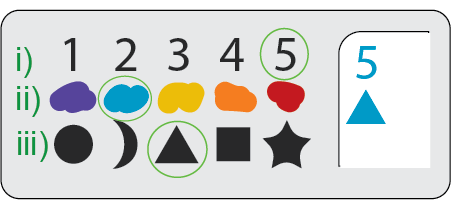
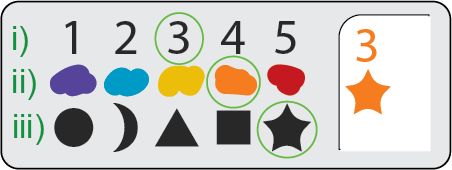
With this structure, things start to get interesting!
What does it mean to “Tic”?
When two cards have two properties in common, they “Tic“.
For example, two cards might have:
the same number and shape, but a different color
the same number and color, but a different shape
the same shape and color, but a different number
There are three different ways for two cards to Tic—and spotting those connections is at the heart of many TIC games.
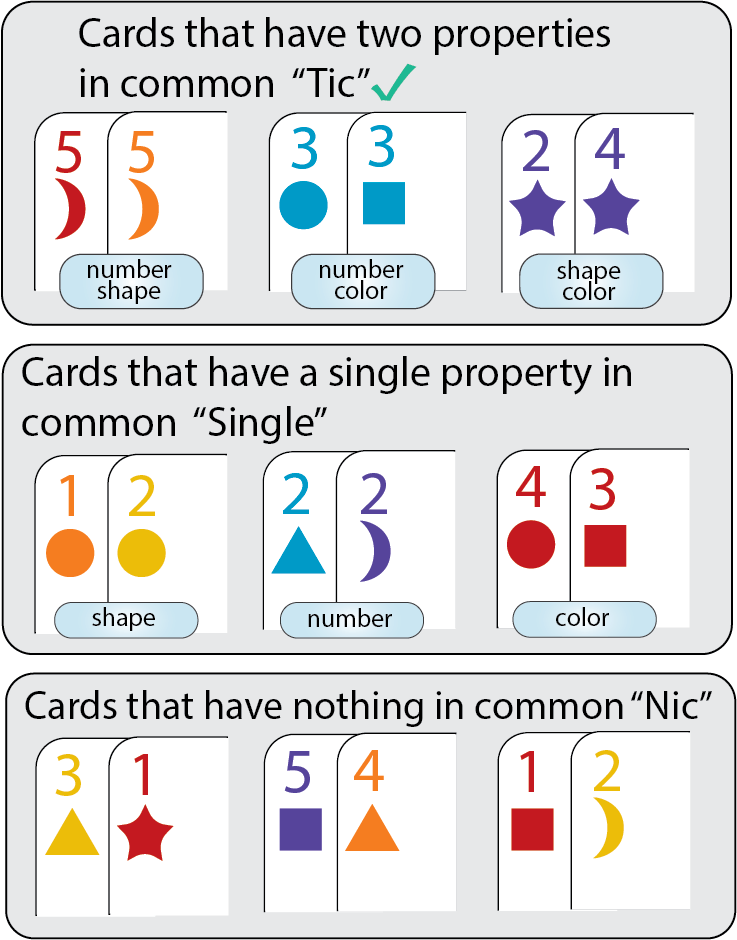
Cards can also have a single property in common, such as only the number, only the shape or only the colour. This is called a “Single“, or a “Sic”.
Cards that have nothing in common are said to “Nic“.
Natural sequences built into the Deck
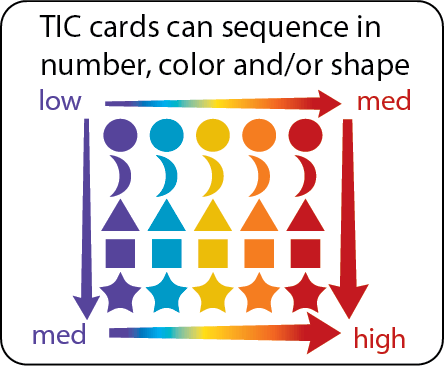
Each of TIC’s three properties follows a natural progression.
Numbers progress from 1 to 5.
Shapes progress by increasing number of sides, from the circle to star.
Colors progress across the rainbow, from violet to red.
Because all three properties are ordered, TIC cards can form natural sequences in number, shape, color—or more than one property at the same time.
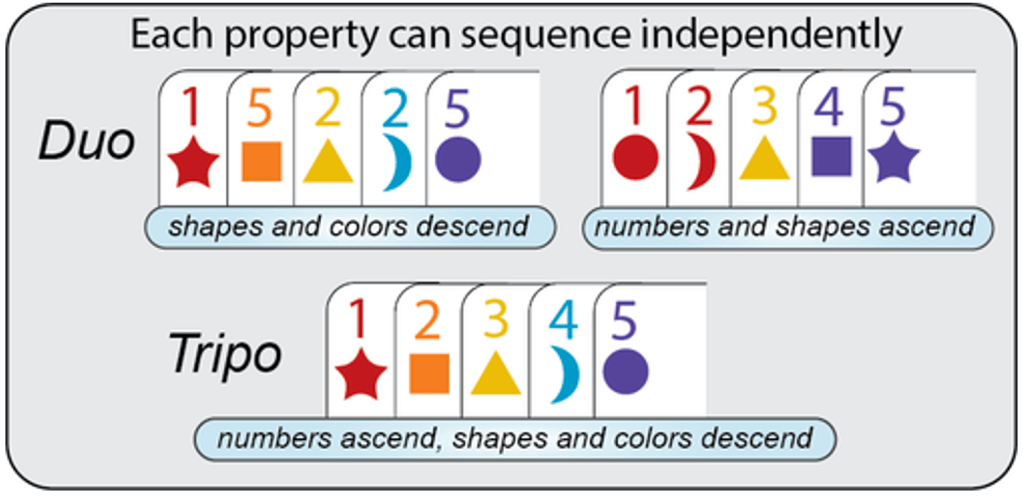
The properties can sequence independently, so numbers might rise while colors or shapes fall.
That opens the door to entirely new types of hands, patterns and games.
The language of TIC
With TIC cards, spotting relationships is part of the fun.
Tic — two properties in common
Sic — one property in common, also called a “Single”
Nic — nothing in common
And when cards form sequences:
Mono — one property sequences
Duo — two properties sequence
Tripo — all three properties sequence
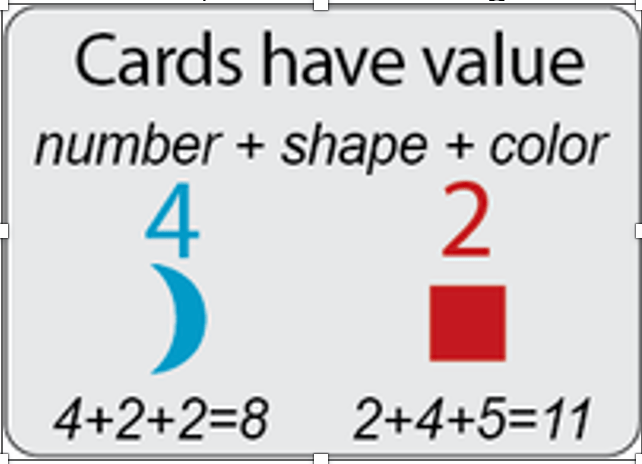
Each TIC card has a value
1, circle and violet are low
5, star and red are high
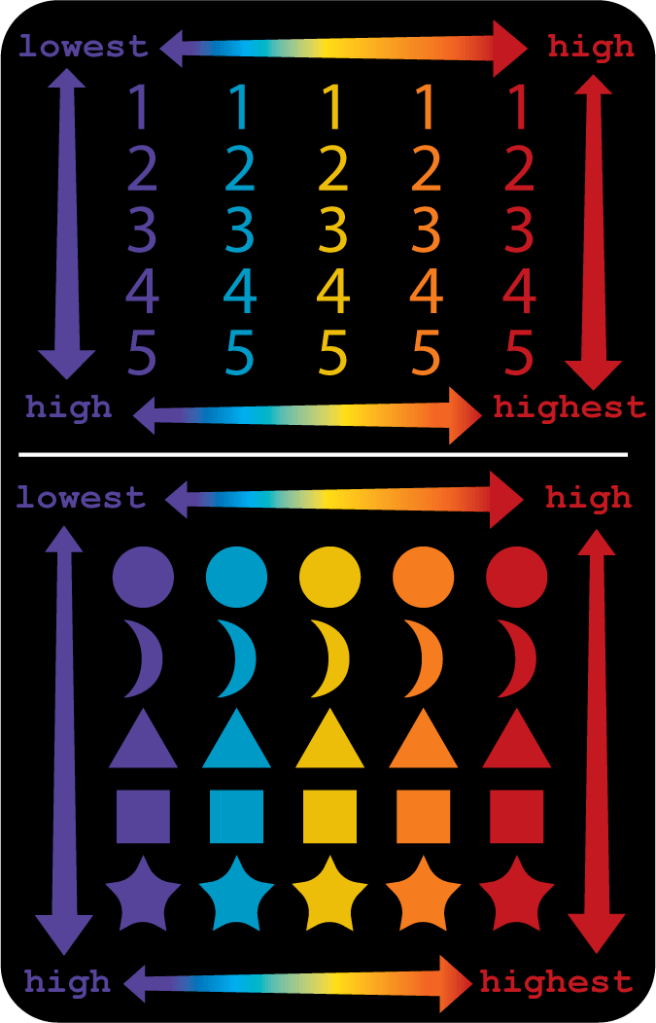
The 5-star-red card is the highest value card in the deck;
The 1-circle-violet card is the lowest value card in the deck.
Some TIC games have an Extreme Card Bonus where playing or using these cards is rewarded.
When scoring TIC cards in some games, add up the number (1-5), the number of sides on the shape (1-5), and the colour value (1-5).